In November 2021, a year into the pandemic, I decided to finally act on something I had been circling for a while. Wildlife photography. My daughters had arrived in July that year, and my wife had travelled to Bangalore for six weeks to be with her mother, to find some support and breathing room during what was, for her, an extraordinarily demanding stretch. Raising twins with limited help and a husband who was not always as useful as he should have been is not a small thing. She needed that time, and she took it.
Back in Mumbai, with the house quieter than it had ever been, I started looking up places to visit within India. Overseas travel was still complicated, and the country had quietly turned inward, tourism picking up in places that had been overlooked for years. A senior mentor suggested Ranthambore. That one suggestion opened a door I have not fully closed since.
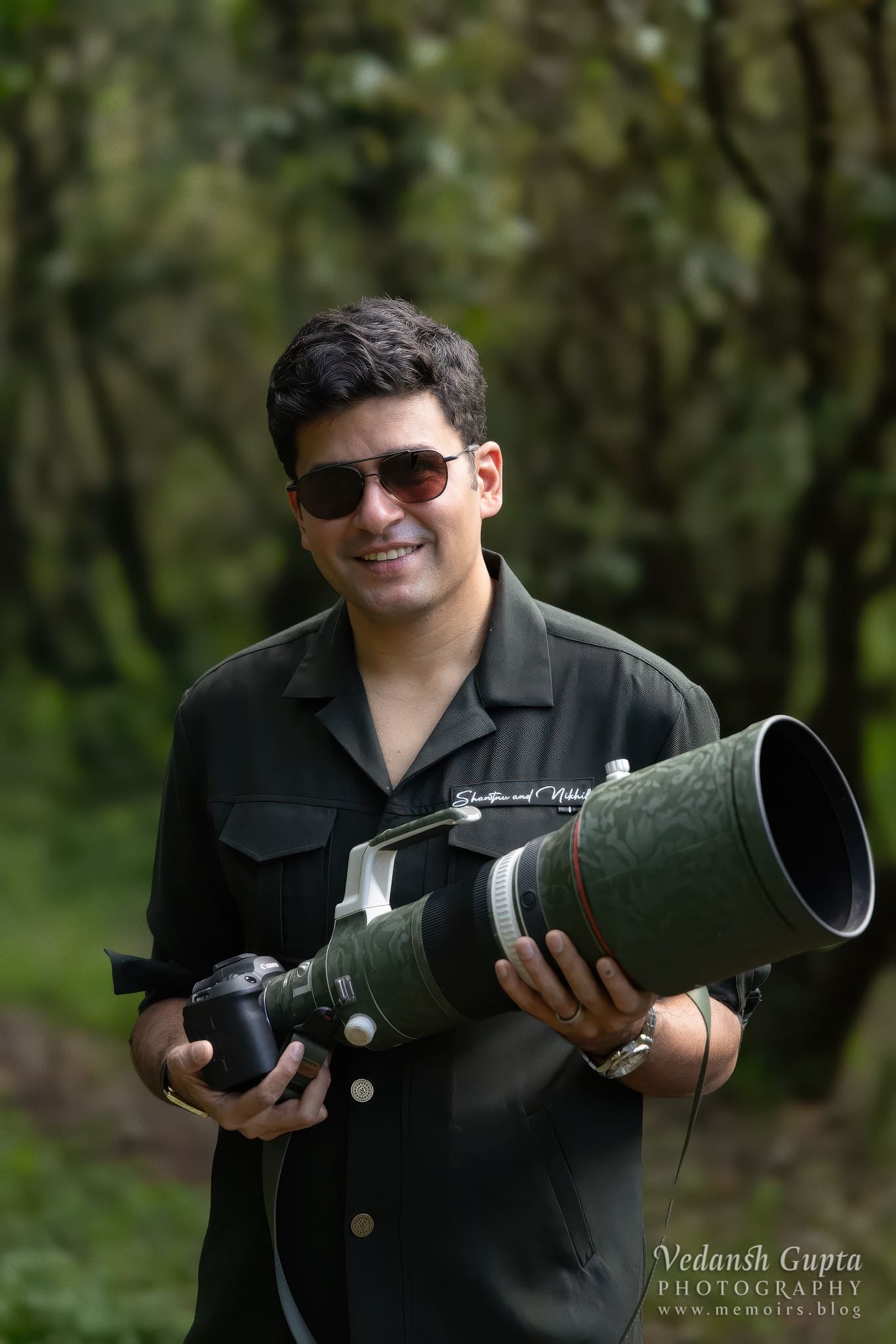
Ranthambore drew me in for reasons I did not entirely understand at the time. Ancient ruins folded into the forest. History and wildness occupying the same space. Two things I had always been pulled toward, suddenly sharing the same address. Just before the trip I searched for the best camera setup for wildlife and the most reliable photography shop in Mumbai. Google pointed me to Reliable Photo Stores in Fort, and that is where I met Harshit, who has been my go-to source for gear ever since. The story of every camera I have owned and how I moved from one to the next deserves its own piece entirely.
But this one is about how the journey began, and where it is going now.
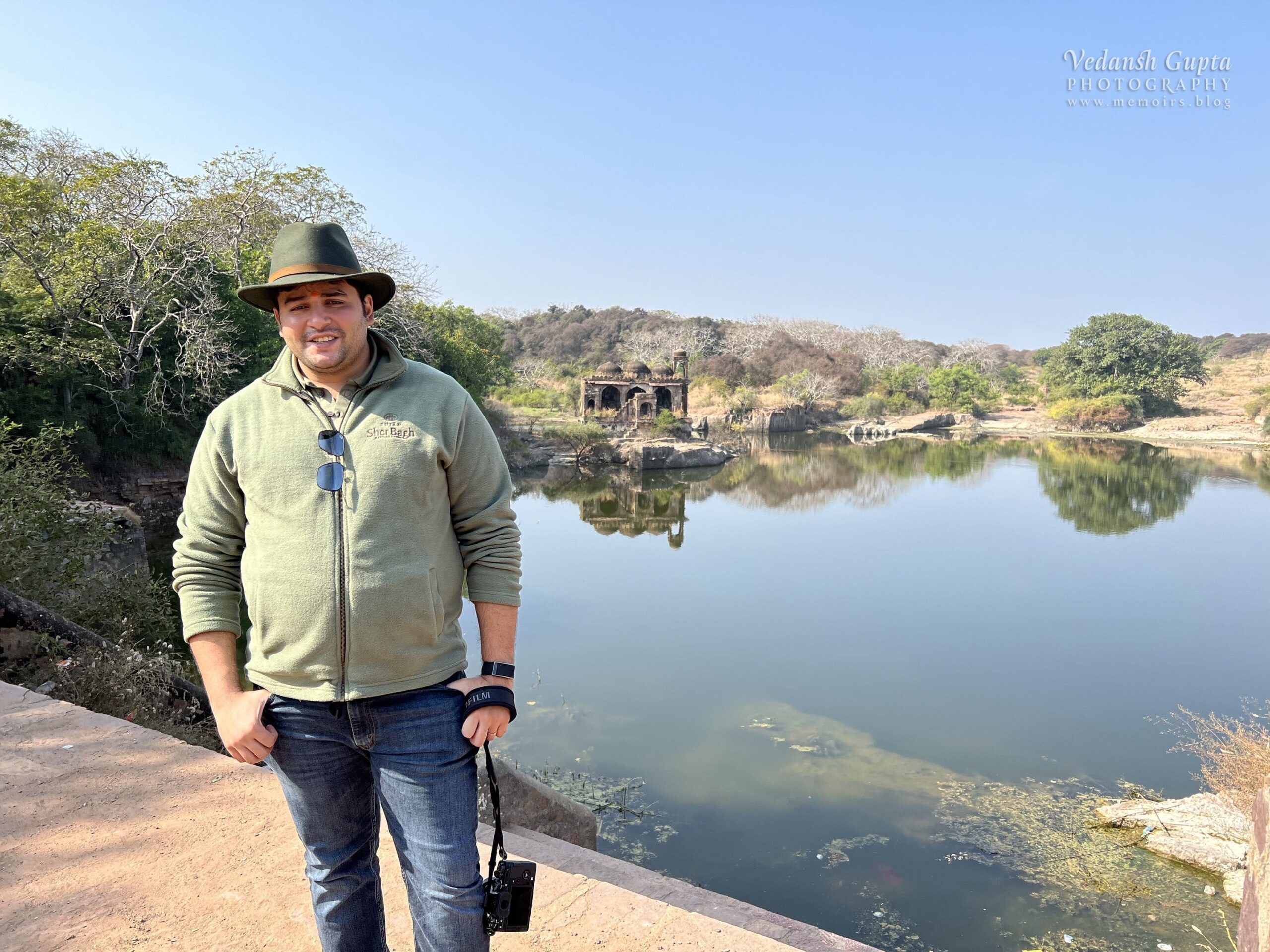
December 2021. Ranthambore. My first safari was with Shyam Ji, one of the oldest and most experienced drivers in the park. He showed me a tiger, close enough to feel. Several others followed over the course of that trip. I barely knew how to use my camera. I did not understand lens hoods or aperture or half the things that would later become second nature. None of that mattered. The sheer fact of being in the presence of a tiger, in the open air, away from shipping schedules and pandemic logistics and the noise of everything, was enough. I came home and immediately booked the next trip.
Pench was next, in January, where a school friend of mine runs a resort. That trip fell apart. My wife’s return home got delayed because everyone in the house had fallen ill, and I tested a false positive for Covid and cancelled out of caution. But the interest had taken root properly by then. I spent time searching for tour operators, found two names, one of whom behaved badly enough that I moved on quickly, and the other became a travel companion for the next couple of years.
Over the following months I travelled to many forests, and I will be honest, not always with full transparency at home. There were trips I kept quiet about, routes I took without announcement. My grandfather was openly against it. He called the wildlife travel unnecessary, a waste of time that could be better spent. At the time I thought he simply did not understand what I needed, that the jungle was how I recovered and reset. Looking back now, I think he understood more than I gave him credit for. He was not trying to take something away from me. He was asking me to find peace closer to home, to invest that energy in the people already around me, to stop running toward something and start being present with what was already there. I did not hear it that way then. I am still learning to hear it now.
My photography mentor arrived at the right moment. His method was consistent from the start. He asked me to send my best work, looked through everything I had selected with confidence, pointed out what was not working in most of it, and lifted the two or three frames that genuinely held up. I respected the honesty enough to stay with it. What followed was a sustained process of unlearning, which has turned out to be one of the more valuable things I have taken from photography into the rest of my life. The assumption that you already know is the thing that stops you from learning anything new. Once I understood that, and genuinely accepted it, things started to move.
Then he asked me something that stopped me. Why did I only do wildlife?
I told him what I believed to be true. That the jungle was where I broke free, recovered, built an image bank that might one day become a legacy worth leaving behind. He listened, and then told me plainly that he thought I was doing it for self-gratification, for the ego boost that comes from exclusivity. From asking guides for something no one else had shot. From racing to post the first frame. From the quiet competition that runs through wildlife photography circles without anyone ever naming it directly. I bristled at that. I was 32, running on ambition and energy, and being told your motivation is ego is not something that lands softly at that age. But it stayed with me.
As wildlife consumed more of my attention, the business got less of it. I noticed the effects. Gradually the monthly trips became quarterly. Then less than that. And somewhere in the shift, the first offbeat trip happened.
Banaras, to mark my mentor’s 50th birthday. His own long-held dream. We went without a clear plan for what to shoot or how. That city does not give you the option of being passive. It insists on being witnessed. That trip introduced me to portraiture and environmental framing in a way that wildlife never had. It also showed me how far artificial intelligence had already reached into grassroots India, in forms and contexts I had not expected, and this was two years ago now. Something began to shift.
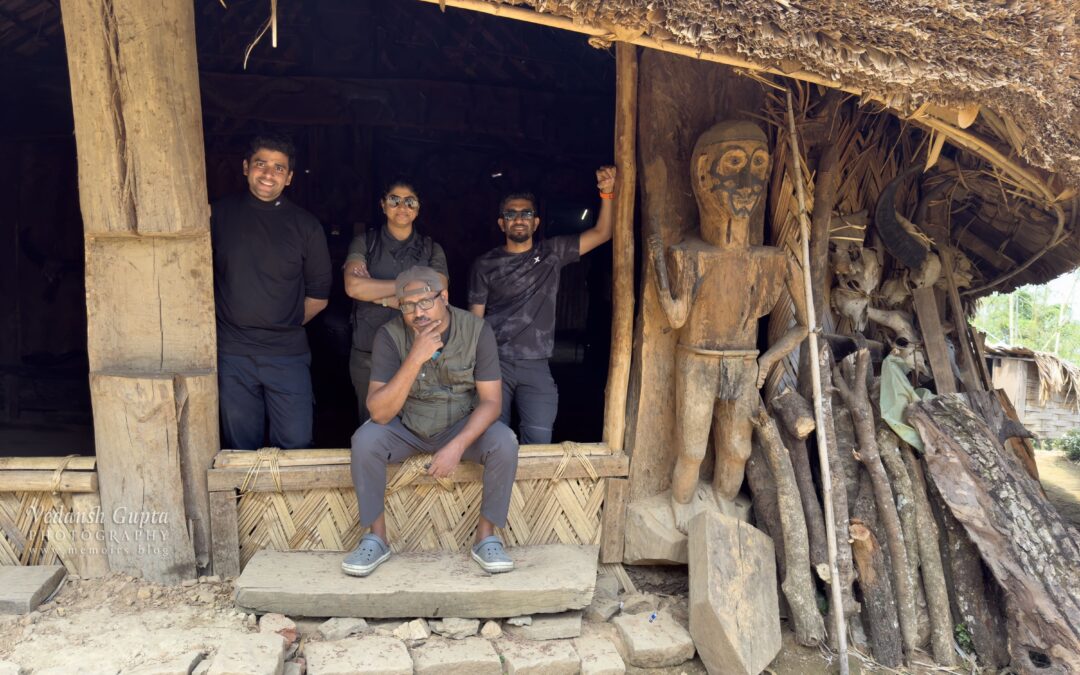
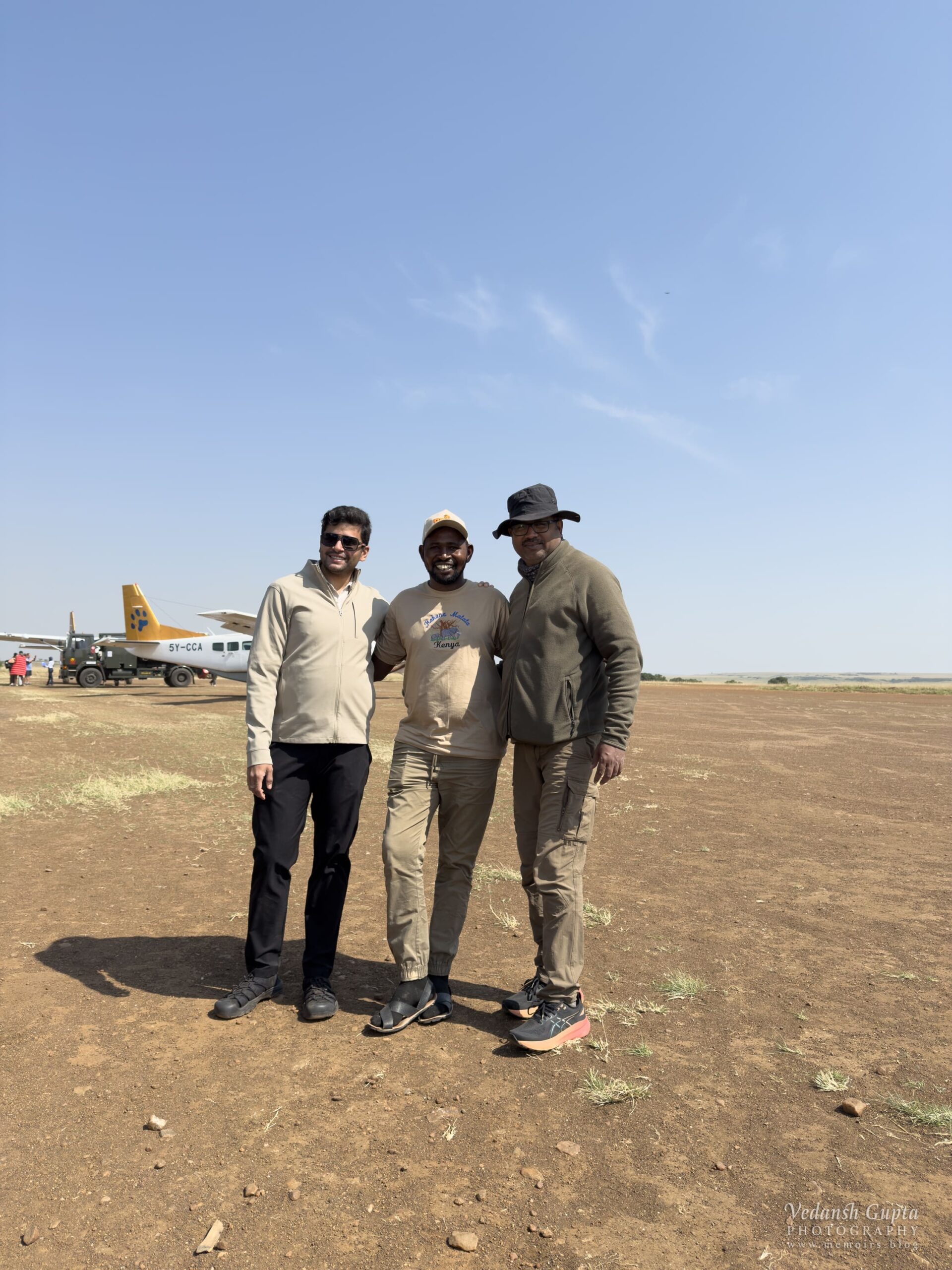
The thrill of the tiger sighting slowly gave way to something quieter and more considered. The pursuit of quantity gave way to the pursuit of a single frame worth keeping. Wildlife gave way to cities, to streets, to faces. From tight animal headshots compared over evening drinks at the lodge, to wide environmental images that tried to hold an entire world in one frame. From Nagaland and the worn, dignified faces of the head hunters, to the volcanic salt flats of Lake Magadi in Kenya, looking for the image that had not been made before.
Stepping away was the right thing. Stopping the race to post a sighting before anyone else, sitting with what had happened, processing it properly, letting the stillness arrive. That stillness does not stay in the jungle. It comes back with you. It shows up in how you think at a desk, how you handle a difficult decision, how you manage the space between what you know and what you do not.
I am writing this at 38,000 feet. Eyes closed for a moment, trying to locate the real reason I keep doing this.
And here is what I come back to every time. Documentation. The archival instinct. The desire to leave behind a record of the world as it exists right now, for my daughters, for whoever comes after. The last clans of warrior women. The final generation of head hunters. A cheetah in pursuit of a serval. A tiger pushing a crocodile back into the water. These moments will not repeat. The world is accelerating, changing faster than any of us can fully track, and what is ordinary today will be history sooner than we expect.
That is why I stay invested. Not the follower count. Not the competition. A growing collection of creative work that documents what is here before it is gone. Time taken away to think, to reset, to come back with more clarity than I left with.
I will slip back into the competitive mindset from time to time. I know this about myself. But I also know that is not who I am trying to be. The goal is harmony over rivalry, presence over performance, and a body of work that means something long after I am not around to explain it.
That is the real reason I do this.
What Varanasi Took From Me
My last piece was about stepping away from the familiar, about unlearning the frame. This one follows naturally from there. Varanasi has been the spiritual centre of our civilisation for longer than most cities have existed. People arrive from every corner of the...
When the Waters Turned
The first two weeks of March 2026 were, to put it mildly, the most turbulent stretch our business had faced in recent memory. We had just closed record numbers in January and February. After two years of absorbing blow after blow, we were finally on the road back....
Why I Sell Paper
People ask me all the time. The question arrives at dinners, at networking events, on flights, in the middle of conversations that are going perfectly well until it does not. What do you do? I sell paper. The reaction is always the same. A pause. A slight tilt of the...
The Weight of Norms
I have always believed my childhood was difficult, though the memories have softened with time into something more like impressions than clear images. There was pressure. There was competition. Excellence was the baseline expectation, and falling short of it had...