
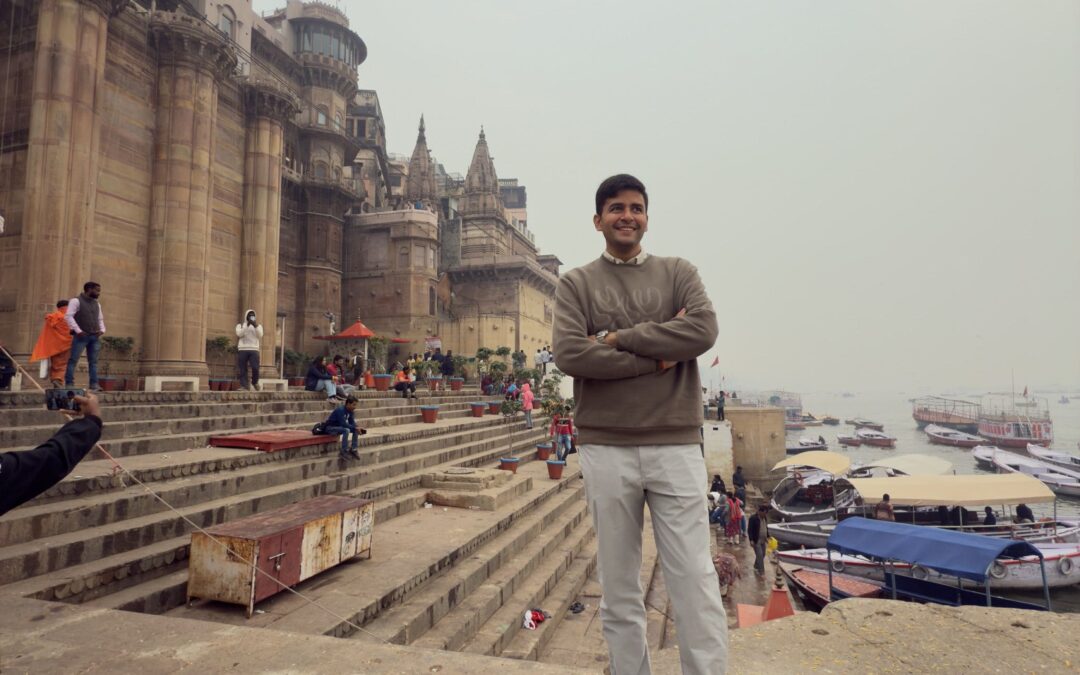
My last piece was about stepping away from the familiar, about unlearning the frame. This one follows naturally from there.
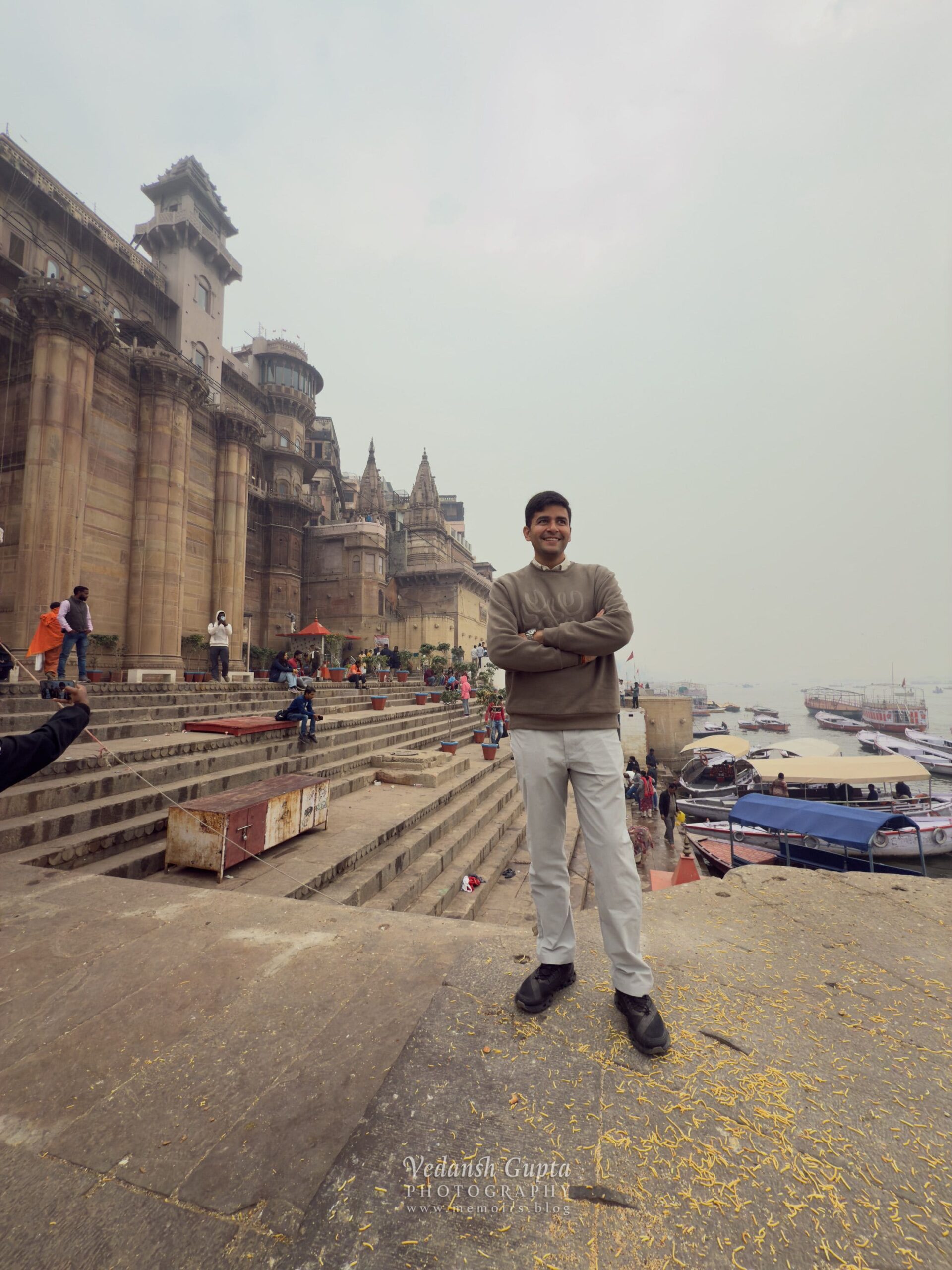
Varanasi has been the spiritual centre of our civilisation for longer than most cities have existed. People arrive from every corner of the world seeking something. Moksha. Clarity. Relief from suffering. Freedom from thoughts that will not leave them alone. Some arrive knowing exactly what they are looking for. Others, like me that December, arrive mostly to understand what all the noise is about.
The idea came from my mentor, somewhere in the middle of a safari. He had spoken about Varanasi for years, about sitting on the ghats, about building enough trust with the sadhus to photograph them properly. It was a long-held dream of his, and once he said it aloud it became a shared one. We started planning.
My imagination of the trip was romantic in that particular way street photography tends to be when you have only seen it through the lens of western photographers and their Instagram accounts. Earphones in, camera around the neck, wandering the ghats without agenda, blending into the city like I belonged there. The genre has been glamorised to the point where the fantasy of doing it can feel more compelling than the reality. My mentor, being the more methodical of the two of us, began researching properly. He goes into every new project the same way: studying what others have already done, understanding the visual language of a place, then asking where the gap is. It is a discipline I am still learning to apply consistently.
Through his research he found a guide and passed the contact to me.
The guide, whose name I will keep to myself, was a genuinely interesting person. He represented something I found quietly inspiring. Fluent in Hindi, working hard on his English, he had embraced technology in a practical and unpretentious way. He used AI tools to draft his professional communications, not to seem like something he was not, but to ensure he was understood clearly by the international photographers who made up most of his clientele. He wanted to represent himself well, and he wanted to represent the country well. If more young people used the tools available to them with that kind of intention, there would be very little standing in our way.
We did not get off to a smooth start, he and I. My communication style can be casual in ways that do not always translate well, and something in the early exchanges landed poorly. There is an irony in the fact that two people speaking the same language can sometimes misread each other more easily than two people working across a language barrier. We resolved it before the trip. My mentor thought the tension was arrogance on the guide’s part. I thought the same, initially. But we had seen enough of his work to trust the process, so we let it go and moved on.
December 2024. We boarded the flight with the particular energy that comes before a trip you have been thinking about for a long time. I had visited Varanasi once before, years earlier, with family during Dev Deepawali. That visit was devotional and festive, not photographic. This was different. On the flight over, two elderly passengers in the row ahead of us fell into a disagreement over something neither my mentor nor I could fully follow, their voices rising and falling with complete conviction, until we were both trying not to laugh out loud. It felt like an appropriate welcome to a city that has never been known for restraint.
We landed in the evening. The hotel was the Brij, on the other side of the ghat, which meant crossing the Ganga by boat to reach it. I remember standing in the boat with the December cold moving through my shirt, earphones in, Mohit Chauhan’s “Phir Se Ud Chala”, playing as the river carried us across. There are moments that embed themselves completely and that was one of them. We checked in, and my mentor was ready to walk within the hour. It was past seven, almost fully dark, and the ghat was still entirely alive.
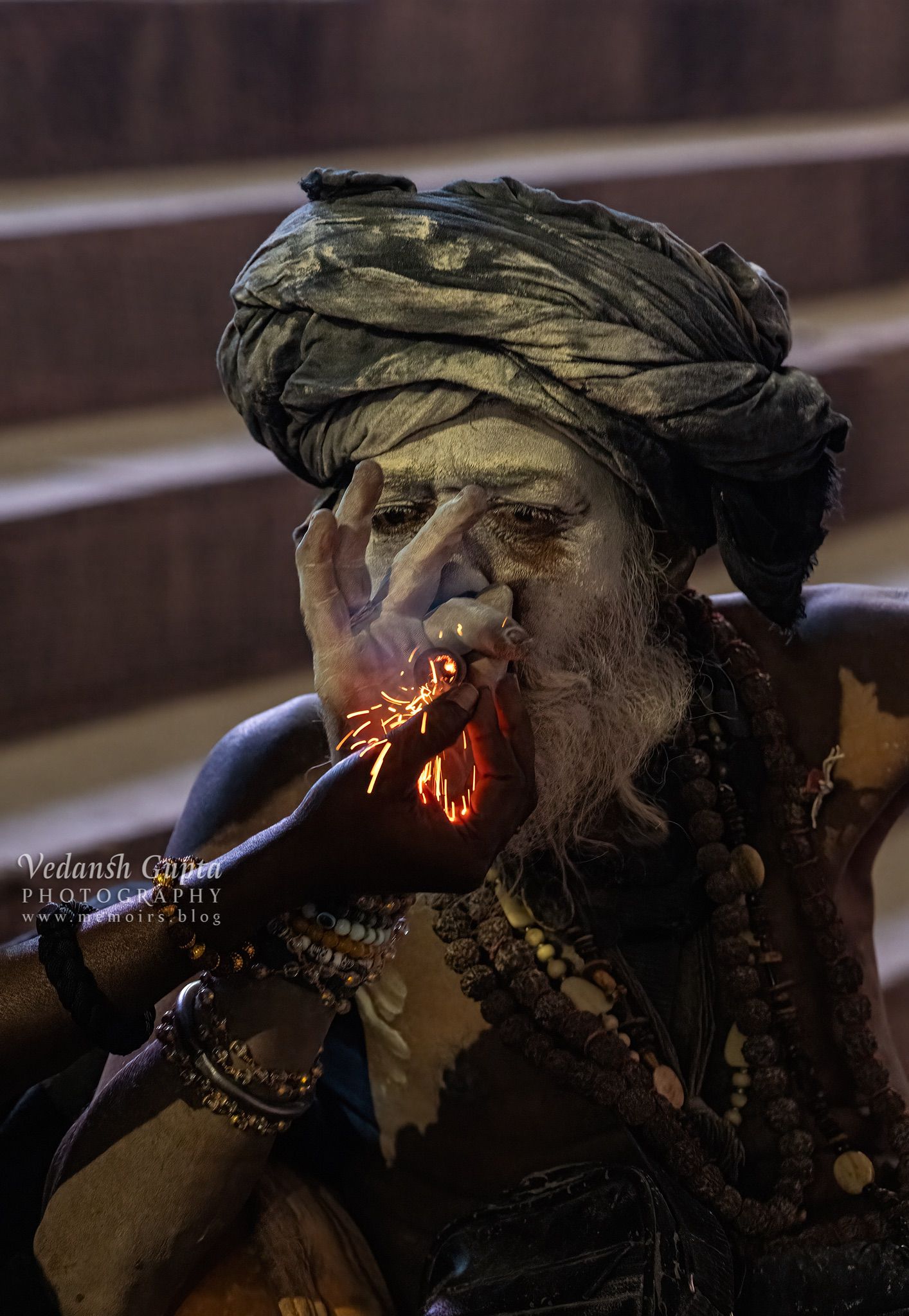
We went out with our cameras and anticipation. The sadhus were already there, settled in their corners under the floodlights, the smoke from their chillams rising in the cold air. Most turned or covered their faces the moment a lens came near them. One sat at the centre of a small orbit of companions, laughing loudly, his presence filling the space around him. His face was covered in ash, a dark shawl wrapped around his shoulders. My mentor encouraged me to approach one of them and speak. I did. He told me something of his journey toward becoming a Naga Sadhu, and I listened carefully. But sitting with the memory of it now, I think he was performing the story more than living it. The genuine article, I have come to believe, does not announce itself. The real sadhu is probably the one you walk past without registering, present in plain sight, completely unbothered by whether you notice.
A Naga Sadhu has, in principle, renounced everything. The pursuit of dharma, the release from earthly attachment, the complete surrender of identity. What I saw on the ghats that night was more complicated than that. We walked for a while longer, took in what the evening offered, and returned to the hotel to sleep before the early start.
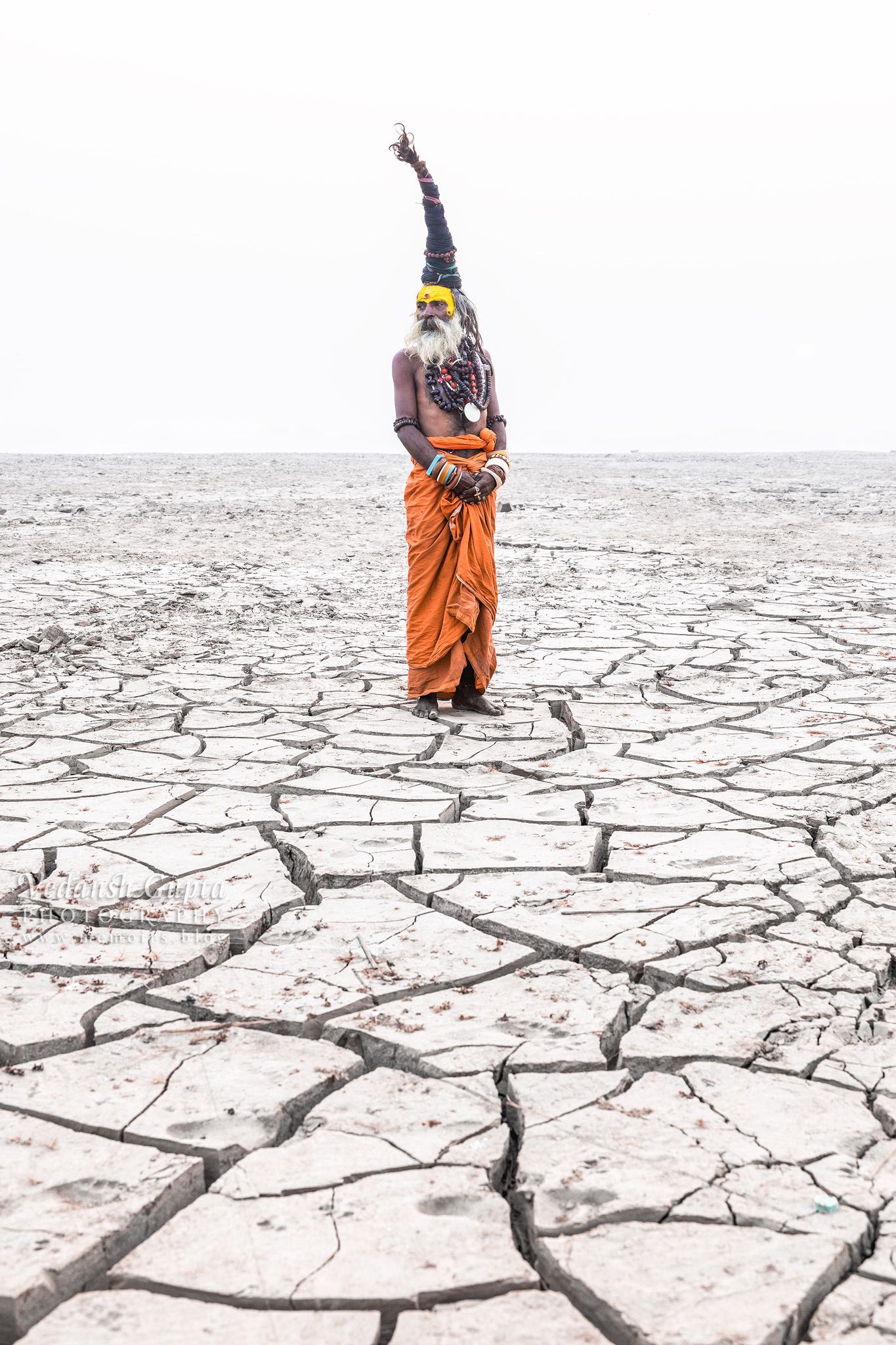
Our guide arrived exactly on time. By 5:30 in the morning we were on the river with two elderly sadhus in a small boat, heading somewhere the guide said was unlike what most photographers found. He was not wrong. He took us to a temporary island, a strip of land that only emerges when the Ganga drops low enough in the dry season and the riverbed surfaces briefly before the water reclaims it. We worked there as the sun came up, positioning the sadhu against the light, asking him to hold a particular stillness. Over the next three days we also photographed a Naga Sadhu at an ancient temple and a group of children dressed as Krishna and Shiva, playing with the unselfconscious ease that only children manage. One of the images from that trip won me my first photography award. Varanasi will always carry a particular weight for me because of that.
But the question I keep returning to is not about the images.
Over the course of those three days I gave money to several of the sadhus we photographed, a gesture of goodwill in exchange for their time and cooperation. It was only later, sitting with what that meant, that the question arrived properly. Are they saints or are they subjects? Am I in a position to judge them? Does accepting payment for a pose contradict the very renunciation they have committed to? The answers were not uniform. Some sadhus wanted nothing. They let us photograph them, looked at the frame with mild curiosity, offered a blessing, and walked away completely indifferent to what we would do with the image. Others asked questions about where the photographs would go. A few were candid about the fact that while they had renounced the world in principle, bhiksha, the tradition of donations from the community, had dried up, and earthly needs remained. For some the chillam is a sacred practice, a means of reaching another state of consciousness. For others it is simply a habit dressed in spiritual clothing.
I stopped judging the difference. Everyone in Varanasi is on their own journey, and so am I. The soul is engaged in a long process of refinement. The mind is both the instrument of that refinement and the thing most likely to get in the way of it. This is why the purest expression of consciousness is described as Lord Shiva, and why the journey toward that purity is considered the entire point of being here at all. We rise in understanding and then slip back when the ego reasserts itself. Then we rise again. That is the cycle, and Varanasi makes it visible in a way that is difficult to look away from.
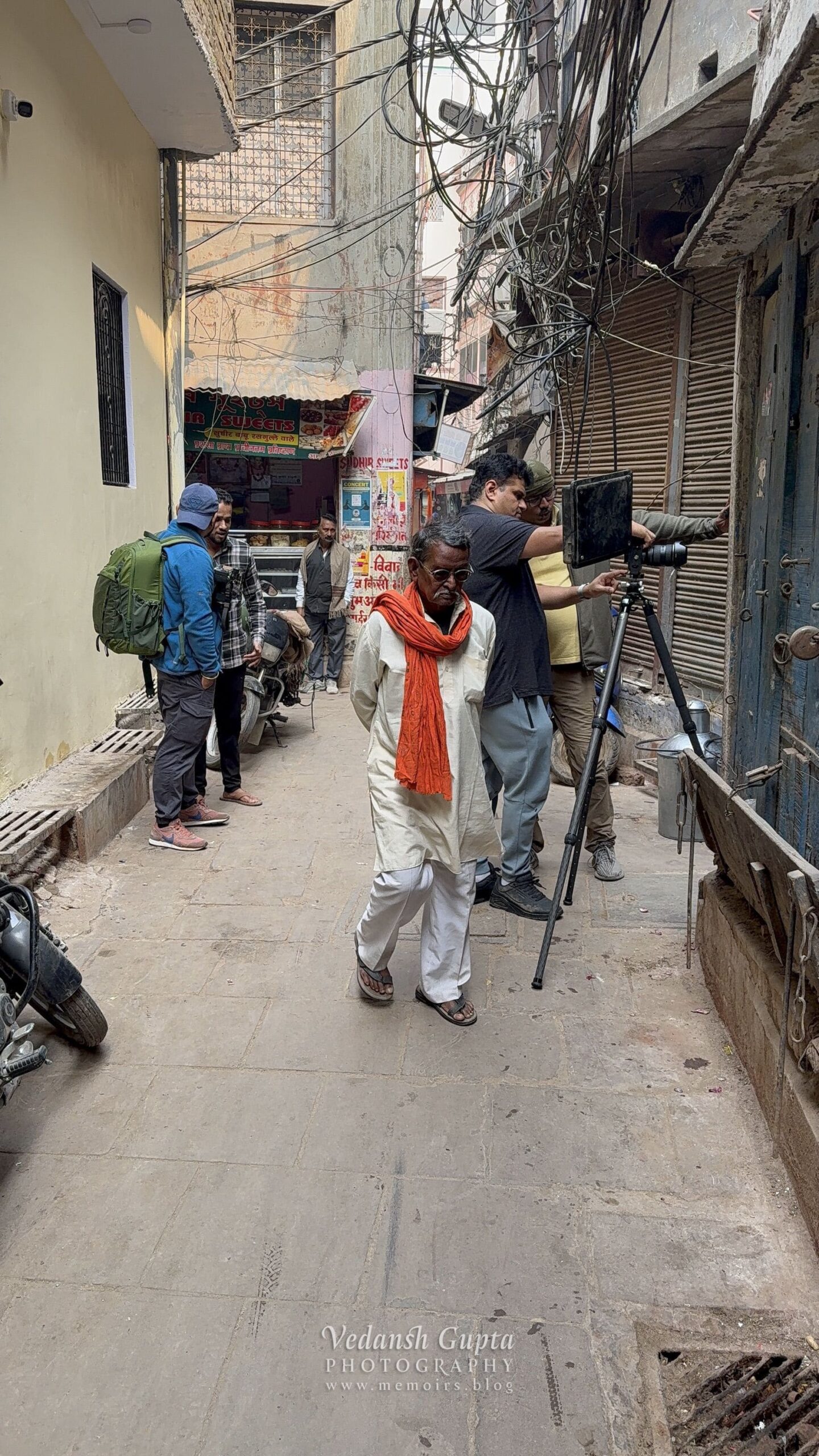
What that city took from me, quietly and without ceremony, was the compulsion to seek the divine somewhere outside myself. I had visited temples throughout my life looking for something I could feel and carry home. In Varanasi I understood, not intellectually but in a way that settled differently, that what I was looking for was not located in a place of worship. It is within. The energy of sacred places is real, I believe that, but I can only access it when I am clear enough to receive it. When the desires and the noise and the performance of seeking have quieted down enough for something else to come through.
We do not need to renounce anything to ascend. Sacrifice alone does not raise consciousness. What raises it is consistent attention, honest self-examination, and the willingness to keep learning even when what you learn is uncomfortable.
Varanasi will keep teaching anyone willing to sit still long enough to listen. I barely scratched the surface. But what I brought home was enough to change the direction I was looking.
Unlearning the Frame
In November 2021, a year into the pandemic, I decided to finally act on something I had been circling for a while. Wildlife photography. My daughters had arrived in July that year, and my wife had travelled to Bangalore for six weeks to be with her mother, to find...
When the Waters Turned
The first two weeks of March 2026 were, to put it mildly, the most turbulent stretch our business had faced in recent memory. We had just closed record numbers in January and February. After two years of absorbing blow after blow, we were finally on the road back....

Why I Sell Paper
People ask me all the time. The question arrives at dinners, at networking events, on flights, in the middle of conversations that are going perfectly well until it does not. What do you do? I sell paper. The reaction is always the same. A pause. A slight tilt of the...
The Weight of Norms
I have always believed my childhood was difficult, though the memories have softened with time into something more like impressions than clear images. There was pressure. There was competition. Excellence was the baseline expectation, and falling short of it had...