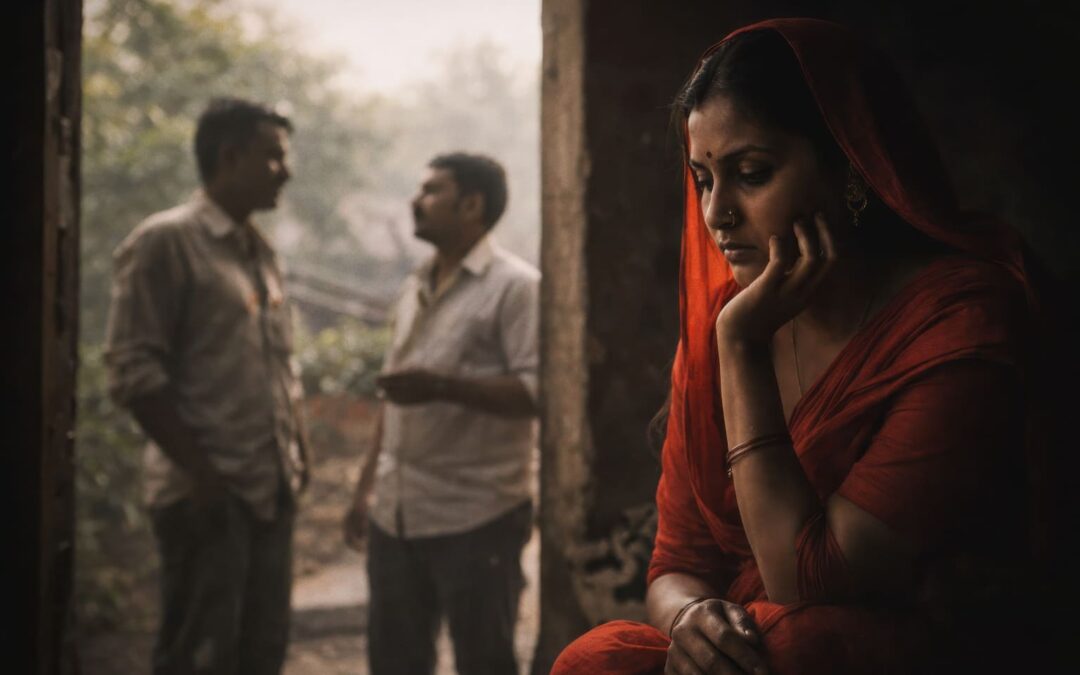
I have always believed my childhood was difficult, though the memories have softened with time into something more like impressions than clear images. There was pressure. There was competition. Excellence was the baseline expectation, and falling short of it had consequences. I do not say this with resentment. If anything, I think it built something in me that I am still drawing on. Resilience is rarely grown in comfort.
We were taught to respect our elders without question. To do otherwise was considered a kind of moral failure. And I understand where that comes from. Age carries experience, and experience deserves its due. But there is a version of this that slides quietly from respect into obedience, and I have never been fully comfortable with that slide. We are given a cognitive mind for a reason. We analyse, question, justify, and decide. That capacity is not a threat to respect. It is the most human thing about us.
As a parent now, what I want most for my daughters is not compliance. It is accountability. I want them to make their own decisions, to stand behind those decisions, and to have the honesty to own the outcomes when those decisions go wrong. That feels more valuable to me than teaching them to defer. But then the question arrives, as it always does. What happens when their decisions diverge from what their elders expect? Does disagreement mean disrespect? Does distance mean failure? Where does personal fulfilment end and social responsibility begin, and does one have to cost the other?
I sit with these questions more than I resolve them.
In India, we touch our elders’ feet. The gesture is believed to dissolve the ego of the younger person and absorb the wisdom of the older one, a transfer of energy from toe to fingertip. There is something genuinely beautiful in that idea when it is felt rather than performed. In the West, you shake hands, you ask how someone is doing, and that is considered sufficient warmth. Neither is wrong. They are just different languages for the same underlying intention, which is acknowledgement.
But recently, at a hospital, a distant relative asked me to touch her feet for her blessings. I did it. I did it without resistance and without feeling. It was an action without meaning, a form without substance. And afterward I kept returning to the same question. Why do we hold so tightly to the performance of a thing when the feeling behind it is absent? Who does that serve?
The same tension appears in how we think about money. An older generation that survived on discipline and scarcity will always struggle to understand a younger person who spends freely on experiences or things that seem unnecessary. And a younger person, who has earned their own way and trusts their own judgement, will always bristle at being told their choices are wrong. Both are operating from their own programming. Both believe they are right. The question of whose mental model deserves more authority is one we have never properly answered as a society.
Then there is death. We grieve. We are expected to grieve visibly, loudly, in ways that satisfy the people watching. If the grief does not present in a recognisable form, we are labelled cold, detached, unfeeling. But I have sometimes wondered whether death, particularly the death of someone who has suffered, might be something closer to a release. Whether there is another way to hold it. The moment you say that aloud, you invite judgement. Society is not comfortable with alternative emotional responses. It wants legible feeling, feeling it can categorise and respond to.
Here is what I keep coming back to. Many of the norms we inherit are less about collective wisdom and more about collective comfort. We grieve visibly because the loss leaves a hole in us and the grief is, in part, about filling it. We seek the touch of younger feet because it satisfies something in the ego, a confirmation of standing, of being seen as someone worth deferring to. We instruct the next generation because releasing control is genuinely difficult, and the instruction is sometimes more about us than them.
And yet.
Our elders carried weight we have not been asked to carry. They made sacrifices in quiet, unglamorous ways so that we could arrive at lives with more room in them. The wisdom accumulated over a life well-lived, the hard-won understanding of what matters and what does not, the ability to see patterns across decades rather than just months, all of that deserves something. Not blind obedience. But genuine respect. The two are not the same thing, and keeping them separate matters.
This is simply something that needed to be said. There is no crisis behind it, no particular wound prompting it. I am fortunate. I have people across two generations whose guidance I can reach for, whose experience I can borrow from, and whose forgiveness I have received more than once when I have gotten things wrong. The path back has usually been shown to me before I had to find it myself.
That is not nothing. That is actually quite a lot.
What Varanasi Took From Me
My last piece was about stepping away from the familiar, about unlearning the frame. This one follows naturally from there. Varanasi has been the spiritual centre of our civilisation for longer than most cities have existed. People arrive from every corner of the...
Unlearning the Frame
In November 2021, a year into the pandemic, I decided to finally act on something I had been circling for a while. Wildlife photography. My daughters had arrived in July that year, and my wife had travelled to Bangalore for six weeks to be with her mother, to find...

When the Waters Turned
The first two weeks of March 2026 were, to put it mildly, the most turbulent stretch our business had faced in recent memory. We had just closed record numbers in January and February. After two years of absorbing blow after blow, we were finally on the road back....
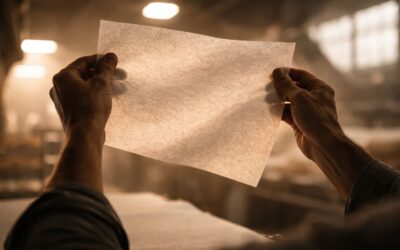
Why I Sell Paper
People ask me all the time. The question arrives at dinners, at networking events, on flights, in the middle of conversations that are going perfectly well until it does not. What do you do? I sell paper. The reaction is always the same. A pause. A slight tilt of the...